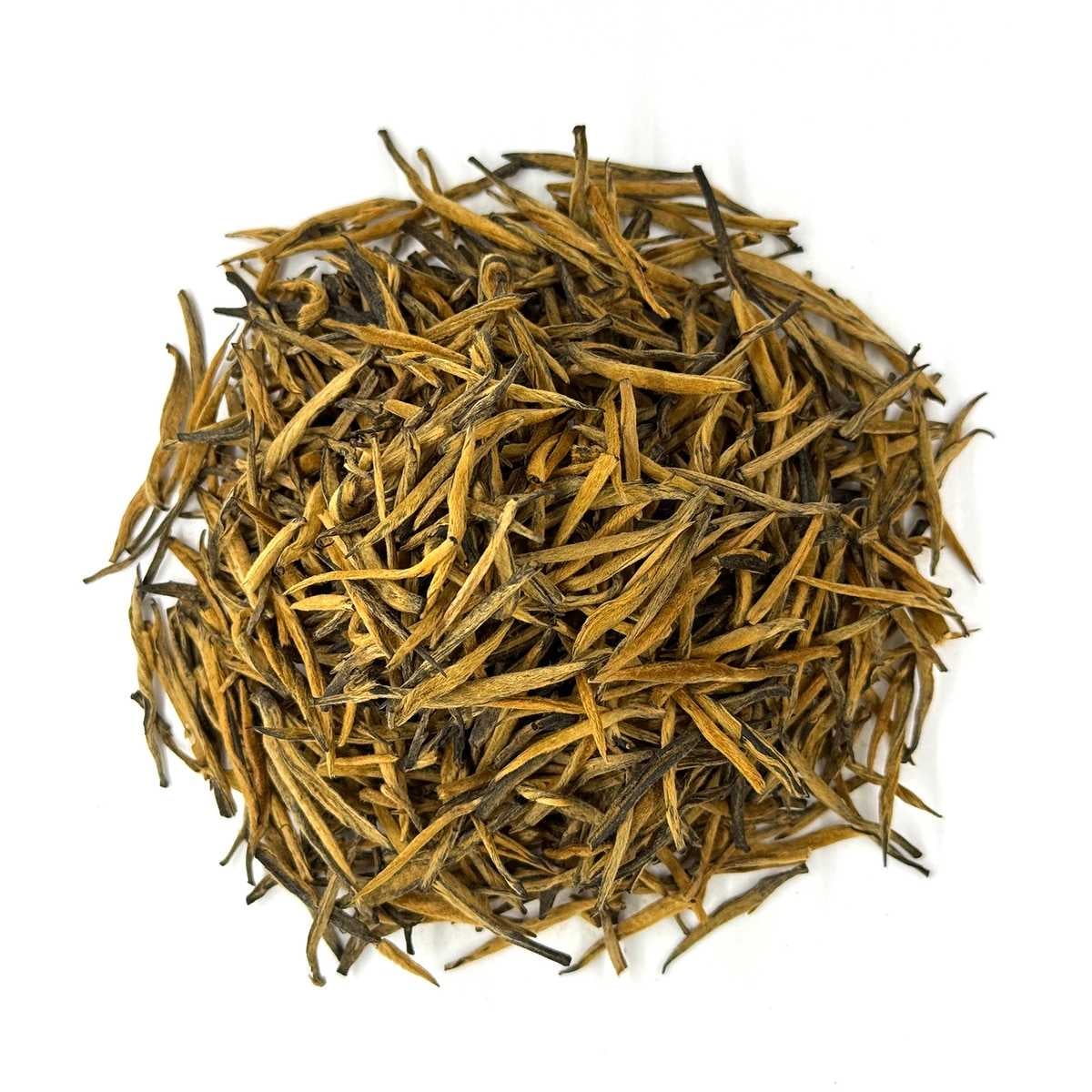
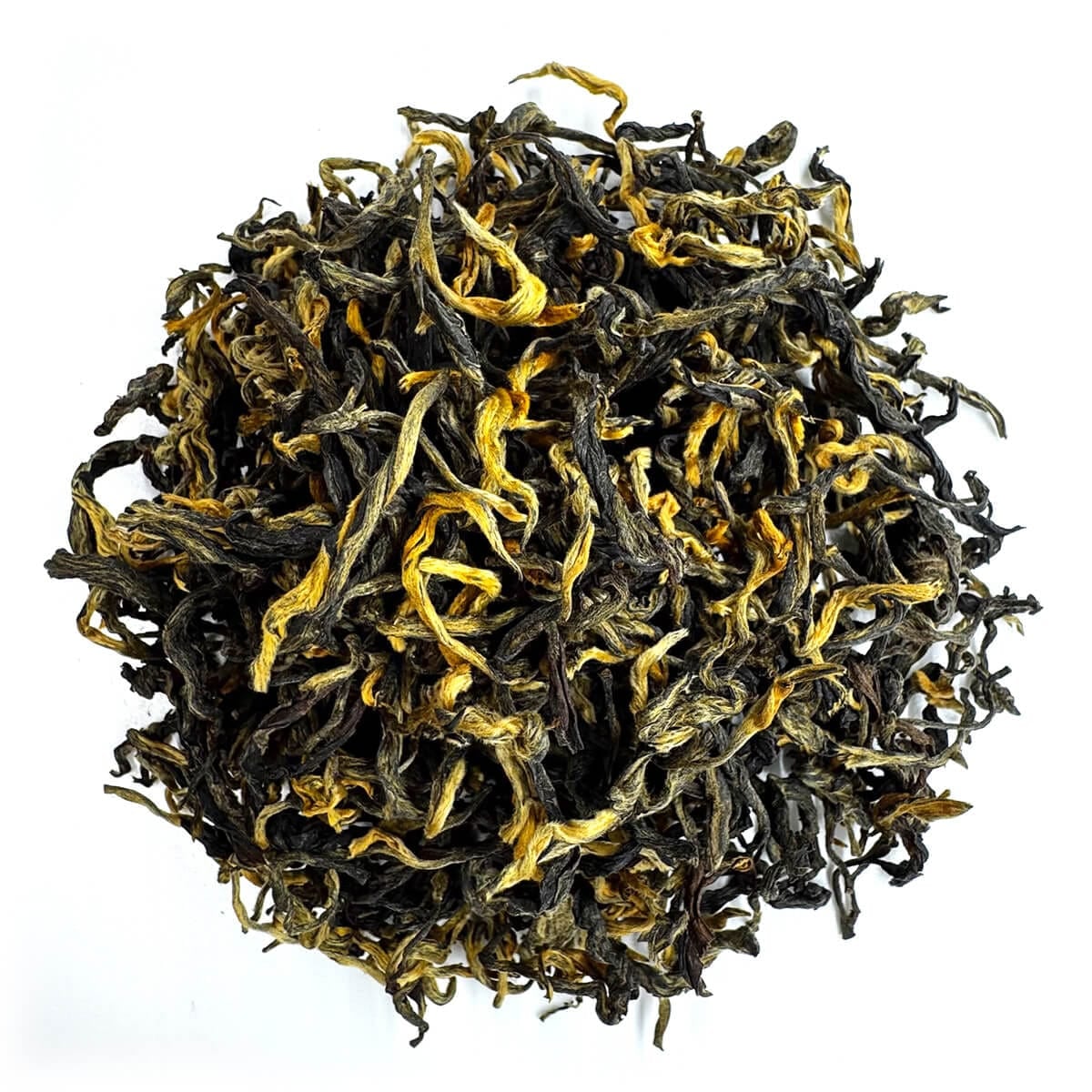
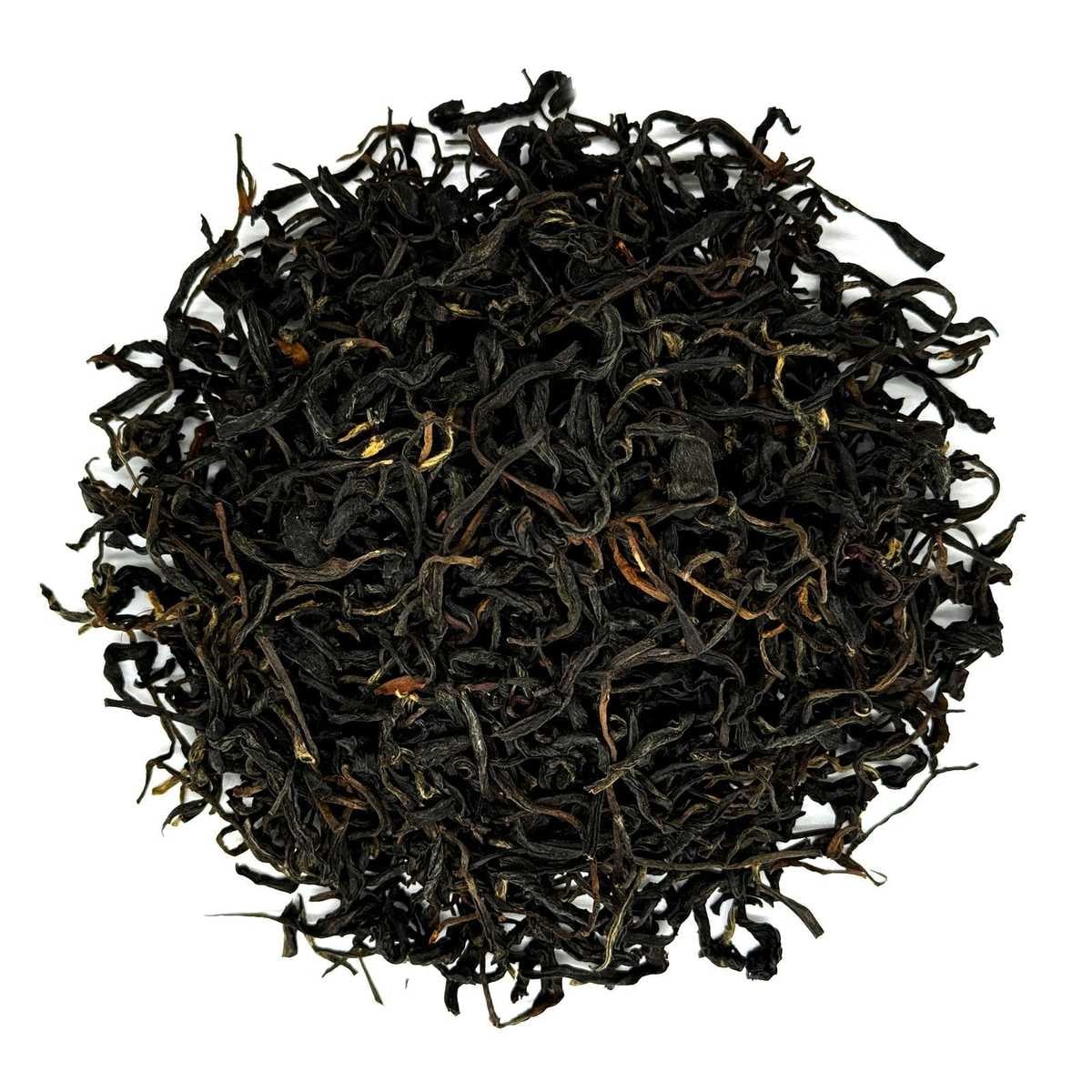
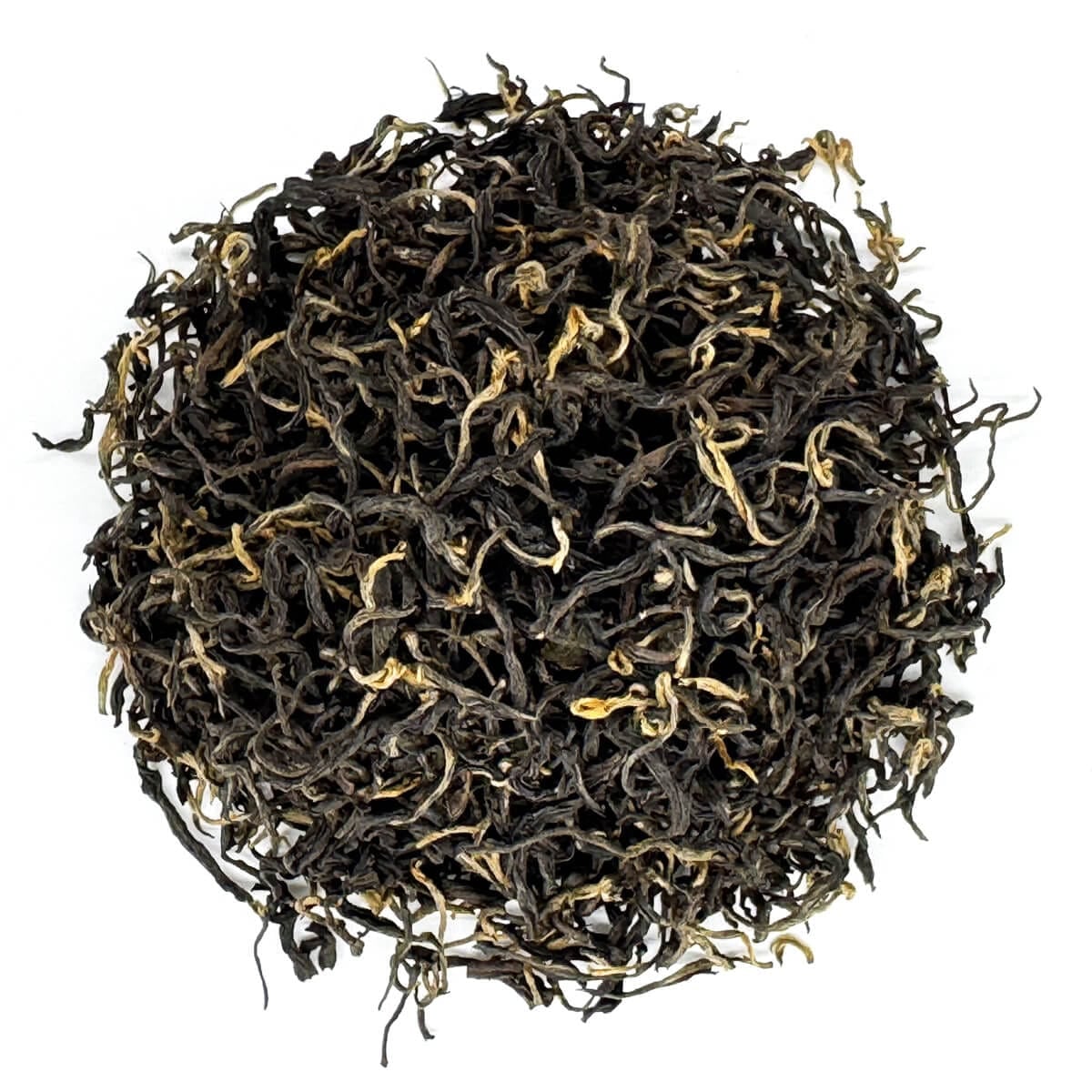
Wuyi Shan (武夷山) is a mountain range in the north of Fujian province (福建), on the border with Jiangxi. It is famous for its danxia-type relief - red sandstone cliffs, deep gorges and the meandering Jiu Qu Xi river (九曲溪, “River of Nine Bends”). The area has been on the UNESCO World Cultural and Natural Heritage list since 1999. The tea plants grow directly in the cracks of the rocks and on narrow terraces between the crags.
Wuyi tea was already sought after under the Tang dynasty (618 - 907), and during the Song dynasty (960 - 1279) pressed tribute cakes were sent from here to the imperial court. It was here, in the Ming and Qing periods, that the technique of semi-oxidised oolong and the very first red (black) tea in the world - Zheng Shan Xiao Zhong (正山小種), known in the West as Lapsang Souchong, coming from the Tong Mu (桐木) mountain reserve - arose.
The climate is humid and misty, with abundant rainfall and mild temperatures; the cliffs retain moisture and shade the gardens from direct sun. The mineral-rich weathered rock soil gives the local teas a characteristic depth - the Chinese call it yan yun (岩韻, “rock resonance”), a mineral, long-lasting impression in the taste.
The region's flagship tea is yan cha (岩茶, “rock tea”) - a strongly oxidised and roasted oolong from cultivars such as Da Hong Pao (大紅袍, “Great Red Robe”), Rou Gui (肉桂, cinnamon) and Shui Xian (水仙). The liquor is amber, with notes of roasting, cinnamon, dried fruit and minerals. Different is Lapsang Souchong - its leaves are dried over pine smoke, giving it a smoky character; by tradition the technique arose when farmers sped up the drying with fire during a wartime passage. This tea is considered the ancestor of all the world's red teas.