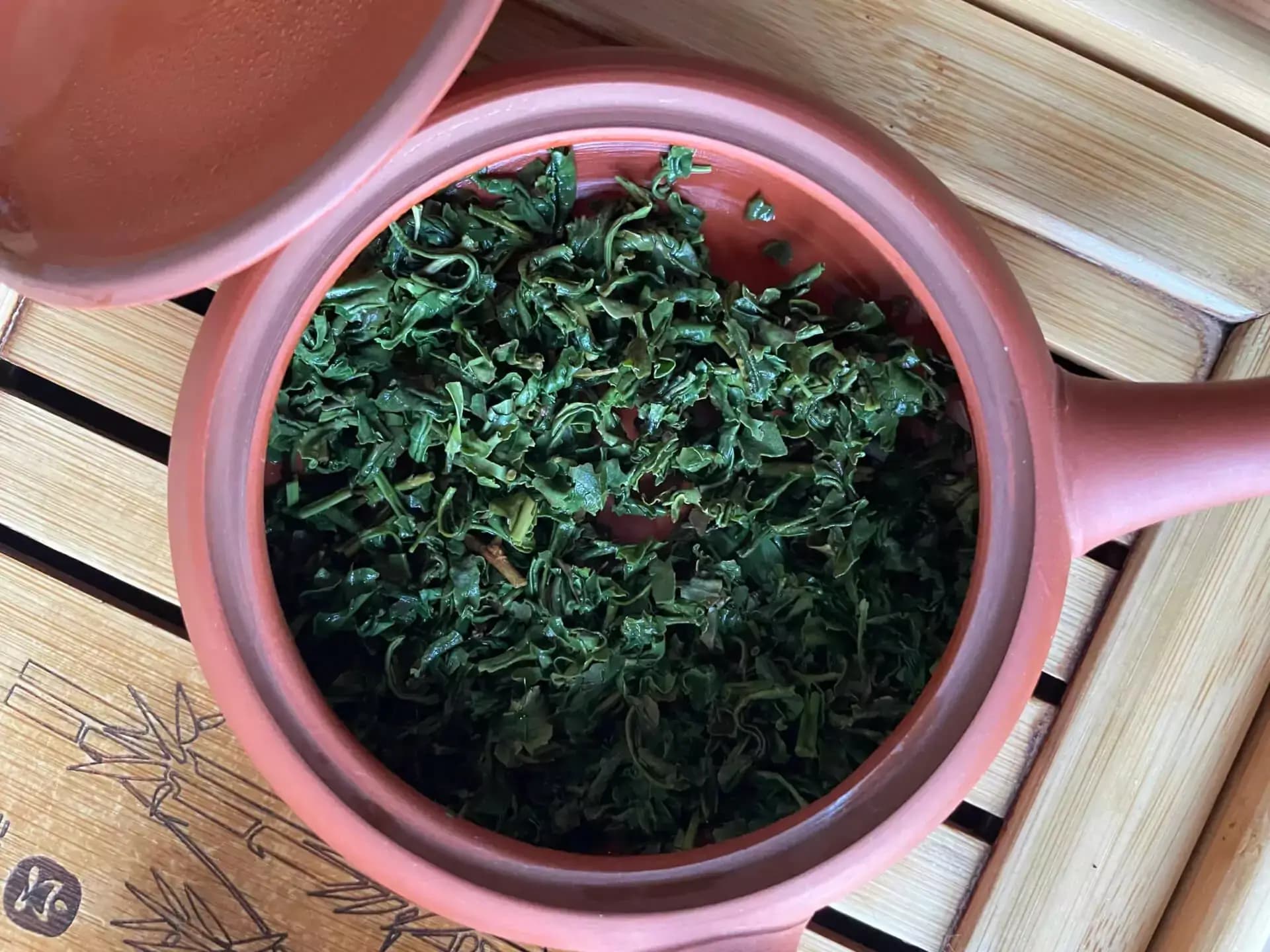
Green tea is the most delicate member of the tea family. It is not oxidised, so it keeps a fresh, vegetal taste - but it is also the most sensitive to preparation. Just a little boiling water and, instead of sweet freshness, you get a bitter, astringent brew. The good news? Once you understand a rule or two, you’ll brew a perfect cup of green tea every time.
Why never boiling water
In green tea, two groups of compounds stand against each other: catechins and tannins, which bring bitterness, and L-theanine and amino acids, which provide sweetness and a gentle umami. Boiling water draws out mainly the bitter ones. That is why you should always let boiled water cool to 70-80 °C - at this temperature the sweetness and fragrance stand out. The method of preparation itself varies depending on where the tea comes from.
Japanese green teas (sencha, gyokuro)
Japanese teas are traditionally prepared in a small side-handle teapot, the kyūsu, with a fine strainer.
Sencha likes water around 70-80 °C and a short steeping so it stays fresh and sweet.
The gentle, shaded gyokuro appreciates even cooler water and a little more patience - the reward is a thick, almost broth-like liquor full of umami.
Chinese green teas - Gong Fu Cha
Chinese green teas such as Long Jing or Bi Luo Chun unfold beautifully with the traditional Gong Fu Cha technique - short, repeated infusions that draw the tea out layer by layer.
Put 6 g of green tea into a 140 ml teapot and pour in water cooled to 70-80 °C. Steep the first infusion for 30 seconds; for the following infusions, adjust the time to the intensity and taste of the tea.
When preparing in a 1-litre teapot, cool the boiled water to 70-80 °C and pour it over 6 g of tea. Steep for 2-3 minutes to achieve a pleasant, balanced taste.
The sweetest and gentlest version of green tea is made cold: pour cold water over 6 g of tea and leave it in the fridge for at least 12 hours. The low temperature draws out sweetness and umami but almost no bitterness - the ideal refreshment for hot days.
Green tea rewards patience and gentleness. Try preparing the same tea once hot and once cold - you’ll be surprised how many different faces it can show. 🍵